Welcome: Suzhou Tsingcarbo Nanomaterials Co., Ltd



sale@tsingcarbo.com
+86 13646226232

Home Applications Light-Absorbing Film: Eliminate Stage St…
1. Introduction: Key Considerations for Reflective Thickness Gauges
Reflective thickness gauges serve as core metrology equipment for nano-scale thin film inspection across semiconductor, flat panel display, optical coating and photovoltaic industries. With continuous upgrading of manufacturing processes, ultra-thin transparent films such as SiO₂, SiN, photoresist, ITO and passivation layers demand extremely high standards for equipment signal-to-noise ratio (SNR) and data repeatability.
Based on spectral reflection interferometry, reflective thickness gauges calculate film thickness, refractive index and other critical parameters by fitting interference spectra. High-end models deliver a measurement repeatability of 0.05 nm for ultra-thin films down to 20 nm. However, in some cases, metal and ceramic measurement stages may retain a degree of surface reflection and scattering after matting and blackening treatment. Secondary reflection from the stage can generate stray light, which may interfere with detection optical paths, reduce SNR, and contribute to data fluctuation. Minimizing this error source is important for process control and production yield during ultra-thin and transparent film measurement.
Some existing approaches, such as chopper differential methods, involve additional optical and electronic components with associated system costs and complexity. An alternative approach is to optimize the stage surface optical properties to absorb stray light at the source, offering a different balance of cost, reliability, and ease of use.
2. Product Principle and Design Advantages
Developed by Tsingcarbo, the proprietary light-absorbing film is a flexible, self-adhesive optical functional film designed for optical absorption applications requiring high performance. Adopting an optimized micro porous light-trapping structure and cleanroom-grade formula, the film achieves excellent wide-spectrum light absorption performance without requiring equipment modification.
The uniform micro porous structure captures incident light effectively. Light rays entering the film undergo multiple internal diffuse reflections and energy attenuation, which helps suppress secondary reflection from the measurement stage. With professional blackening modification, the product maintains stable ultra-low reflectance across UV to near-infrared spectrum (200–2500 nm), with a typical surface reflectance below 0.7%, fully matching the full-band detection requirements of commercial reflective thickness gauges.
Tsingcarbo light-absorbing film features a stable structure, low outgassing, and resistance to solvents and temperature. The premium adhesive layer ensures flat lamination, minimal particle shedding and no lint falling, fully complying with strict semiconductor Fab and cleanroom manufacturing standards.
3. Standard Lamination Process with Zero Equipment Modification
Tsingcarbo provides a complete standardized retrofitting solution for thickness gauge stages. The lamination procedure requires no professional equipment or high-temperature treatment, enabling fast deployment inside cleanrooms with minimal production downtime.
Stage Cleaning: Wipe the metal or ceramic stage surface with dust-free cloth and anhydrous ethanol to remove oil stains and particles, ensuring a clean and flat bonding base.
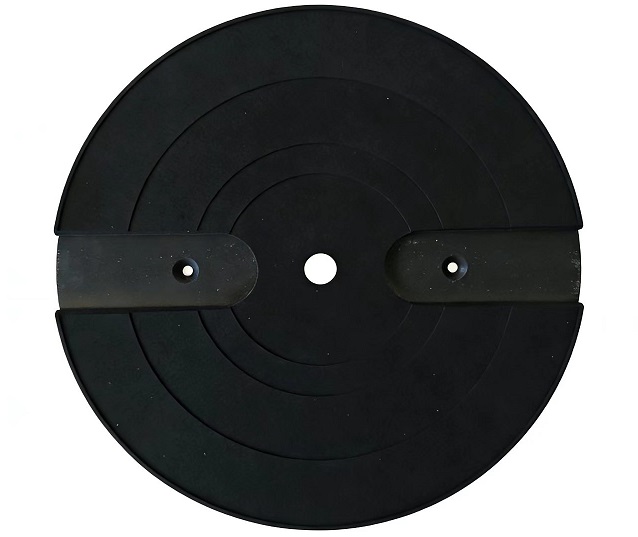
Custom Cutting: Laser precision cutting according to customized stage shapes including round, square and special profiles to achieve perfect size matching.
Clean Lamination: Peel off the release liner, attach the light-absorbing film evenly to the stage surface, and roll flat with rubber tools to eliminate bubbles and wrinkles.
Optical Verification: Test the overall surface reflectance after lamination to confirm qualified stray light suppression performance and stable measurement accuracy.
The entire physical lamination process produces no VOC emissions and requires no curing time. The equipment can be put back into mass production immediately after installation, greatly reducing production loss caused by equipment shutdown.
4. Key Product Advantages
Tsingcarbo light-absorbing film offers the following features for optical absorption applications:
Cleanroom Grade Purity: Stable micro structure prevents particle and lint shedding with low outgassing performance, fully adapting to front-end semiconductor and flat panel precision manufacturing environments.
Ultra-Low Wide-Band Reflectance:Consistent light absorption performance within 200–2500 nm spectrum effectively eliminates stray light and random reflection, significantly improving detection SNR and data stability.
Reversible and Replaceable: The film can be completely peeled off without residual adhesive or surface damage to the original stage. Worn or contaminated films can be replaced quickly, allowing quick replacement without factory return or recoating.
Negligible Optical Path Impact: With an ultra-thin thickness of 0.4 mm, the film keeps the original flatness of the stage and does not affect optical focusing, calibration and measurement results.
Superior Environmental Resistance: Working temperature ranges from -40℃ to 120℃. The film resists short-term contact with common organic solvents such as acetone and isopropanol, adapting to daily cleanroom maintenance and long-term mass production.
Cost-Effective Alternative: Delivers strong core performance while helping to reduce procurement and equipment upgrading costs, suitable for large-scale retrofit of existing thickness gauge equipment.
5. Field Application & Industry Value
Customer Feedback
The Tsingcarbo light-absorbing film has been widely deployed in semiconductor, flat panel display and optical component factories, delivering consistent and reliable optimization results:
“The whole lamination process takes less than 10 minutes with no equipment shutdown or modification. After installation, the data jitter during ultra-thin silicon oxide film measurement is completely eliminated.”
“This light-absorbing film offers strong performance with lower replacement and maintenance costs, bringing excellent cost efficiency for mass production.”
“No particle shedding occurs in cleanroom environments, which fully meets the strict requirements of semiconductor precision processes.”
Industry Significance
Reflective thickness gauges are indispensable for wafer coating, display film layer, PV passivation layer and optical coating inspection. Tiny stray light interference can cause cumulative measurement errors and affect manufacturing yield. As a high-performance and cost-effective upgrading solution, Tsingcarbo light-absorbing film helps suppress stage stray light at the source, supporting nano-level measurement repeatability and accuracy. It is suitable for both new equipment matching and stock equipment retrofitting, offering a cost-effective solution for optical absorption applications and providing reliable solutions for high-precision optical metrology industries.
6. Conclusion
Precision manufacturing relies on subtle optical control. Minor stray light interference determines measurement consistency and final product yield. Leveraging its proprietary material R&D, Tsingcarbo develops professional light-absorbing film solutions for thickness gauge stage retrofitting, balancing cleanliness, stability and economy. In the future, Tsingcarbo will continue to optimize optical absorption materials, empower high-precision metrology in semiconductors, displays and photovoltaics, and support cost reduction and quality upgrading for high-end manufacturing industries.
Name: Jimy Ji
Mobile:+86 18915768767
Tel:+86 13646226232
Whatsapp:8615370757815
Email:sale@tsingcarbo.com
Add:No. 326, Honghu Road, Economic and Technological Development Zone, Kunshan, Suzhou, Jiangsu, China