Welcome: Suzhou Tsingcarbo Nanomaterials Co., Ltd



sale@tsingcarbo.com
+86 13646226232

Home Technology Tsingcarbo: Core Nanoporous Carbon — Abo…
Technology Center 丨 Tsingcarbo: Core Nanoporous Carbon —— About Suzhou Tsingcarbo Nanomaterials
Suzhou Tsingcarbo Nanomaterials Co., Ltd. is a high-tech enterprise focusing on nanoporous carbon materials, founded by a core R&D team from the Department of Chemistry, Tsinghua University. We integrate material design, synthesis, surface engineering, and application development to provide high-performance solutions for gas chromatography, optical systems, precision instruments, and industrial light management.
Our core strengths include precise pore-size control (1–1000 nm) and customized surface functionalization, which effectively solve key performance bottlenecks in analytical separation, optical stray light suppression, and precision manufacturing.
Core Material Platform: Nanoporous Carbon
Material Fundamentals
Our flagship nanoporous carbon materials feature highly uniform, tunable pore structures (micropores < 2 nm, mesopores 2–50 nm, macropores > 50 nm) and high specific surface area (up to 2,000 m²/g). Produced through solvothermal synthesis and controlled pyrolysis, we achieve precise control over particle size (1–5 μm) and morphology, with outstanding chemical stability, thermal resistance, and adsorption selectivity.
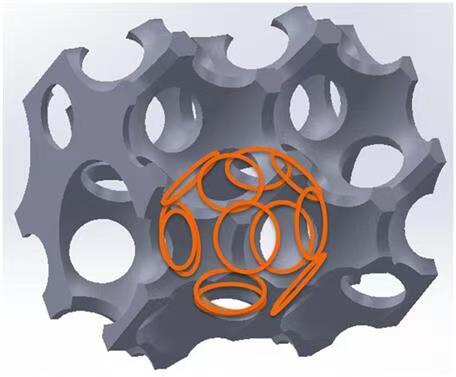
[picture 1:Nanoporous Carbon Structure]
Caption: Hierarchical pore structure of Tsingcarbo nanoporous carbon (micropores, mesopores, macropores)
Key Technical Advantages
—Precise Pore Engineering: Tailored pore size and distribution for target analytes or gas separation (e.g., He/Ne separation, VOC adsorption).
—Surface Functionalization: Custom hydrophobic, hydrophilic, polar or non-polar modification to optimize separation and adsorption performance.
—High Uniformity: Monodisperse carbon microspheres with narrow particle size distribution, ensuring stable column packing and low backpressure.
—Thermal & Chemical Stability: Stable at high temperatures (up to 400°C) and resistant to organic solvents and corrosive gases.
Technology 1: Nanoporous Carbon for Gas Chromatography Columns & Packings
Core Technology: GC Stationary Phases & Column Packing Materials
We develop high-performance nanoporous carbon-based stationary phases and column packings for capillary and packed GC columns. They deliver superior separation efficiency, selectivity, and durability compared with conventional polymer or silica-based phases.
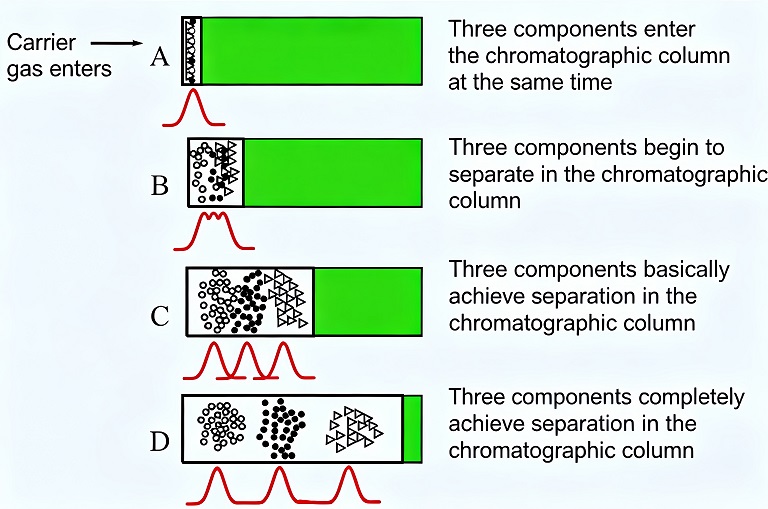
[picture 2:Gas Chromatography Column & Packing Material]
Caption: Application of nanoporous carbon in capillary columns and packed GC columns
Working Principle
In gas chromatography, separation relies on differential interactions between analytes and the stationary phase. Our nanoporous carbon materials enable separation through:
—Size exclusion: Small molecules enter micropores and are retained longer.
—Selective adsorption: Polar/non-polar matching between analytes and carbon surface.
—Uniform pore structure: Reduces mass transfer resistance, improving column efficiency and peak sharpness.
Applications
—Capillary GC Column Coatings: Ultra-thin carbon films for high-resolution separation of VOCs, hydrocarbons, pesticides, and pharmaceutical residual solvents.
—Packed GC Column Fillers: Monodisperse mesoporous carbon microspheres for permanent gas separation (He/Ne, H₂/O₂/N₂), natural gas analysis, and industrial gas testing.
—He/Ne Separation Media: Custom-engineered porous carbon for high-efficiency helium-neon separation and purification.
—Thermal desorption sorbents: High-capacity adsorbents for trace VOC enrichment in environmental monitoring.
Technology 2: Optical Absorbing Film
Core Technology: Ultra-Black Optical Absorbing Film
We design and manufacture Optical Absorbing Film for stray light suppression, anti-reflection, glare elimination, and contrast improvement in precision optical systems. Our films combine nano-carbon light absorption and thin-film structure design to achieve ultra-low reflectivity and broadband absorption.
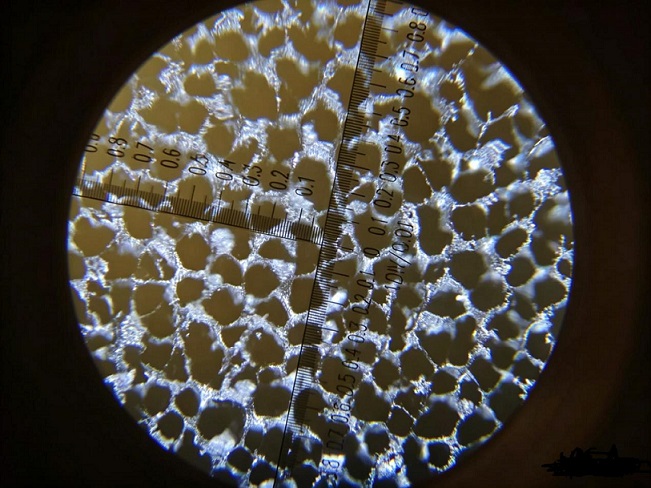
[picture 3:Optical Absorbing Film Structure & Light Trapping]
Caption: Working mechanism of Optical Absorbing Film – light absorption and optical trapping
Working Principle
Material absorption: Nanostructured carbon components efficiently absorb light across UV–VIS–NIR bands.
Porous optical trapping: Light entering the porous structure is trapped and difficult to escape.
Together they achieve near-perfect light absorption, effectively eliminating ghosting, flare, and internal reflections.
Key Properties
—Ultra-low reflectivity: Reflectance < 1% in visible and near-infrared regions.
—Ultra-thin & flexible: Conforms to complex curved surfaces such as lens barrels and baffles.
—High stability: Temperature-resistant, non-shedding, abrasion-resistant, low VOC.
—Easy assembly: Available with custom adhesive backing for lamination on metal, plastic, and glass.
Applications
—Camera & Lens Systems: Internal lining for lens barrels, lens hoods, aperture assemblies, and optical baffles.
—Optical Instruments: Stray light absorption in spectrometers, sensors, monochromators, and imaging systems.
—Industrial Optics: Anti-glare and light-trapping films for laser systems, machine vision, and precision detection equipment.
Competitive Advantages
—Superior to traditional matte paint, sandblasting, and flocking in absorption performance.
—No particle shedding, avoiding contamination of lenses and sensors.
—Thin and flexible, ideal for miniaturized optical structures.
—Stable performance across wide temperature and wavelength ranges.
R&D and Customization Capabilities
We provide fully customized material solutions for global customers:
Custom pore design for GC columns and gas separation.
Custom optical performance for Optical Absorbing Film (reflectivity, thickness, adhesion).
Surface modification for compatibility with different substrates.
Stable mass production from lab scale to commercial volume.
Name: Jimy Ji
Mobile:+86 18915768767
Tel:+86 13646226232
Whatsapp:8615370757815
Email:sale@tsingcarbo.com
Add:No. 326, Honghu Road, Economic and Technological Development Zone, Kunshan, Suzhou, Jiangsu, China